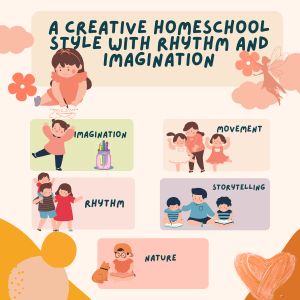
A creative homeschool style with rhythm and imagination
Waldorf-Inspired Homeschooling
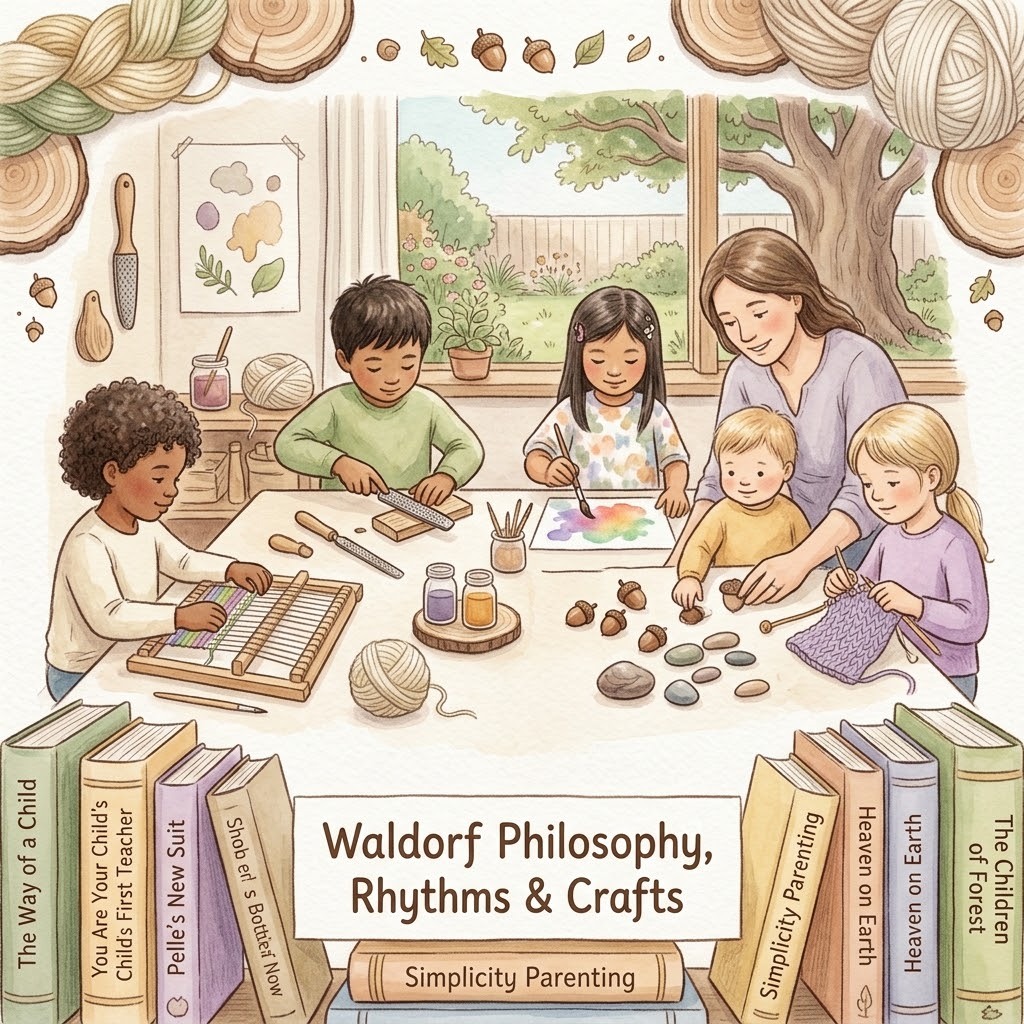
Waldorf-inspired homeschooling often centers on rhythm, storytelling, art, nature, movement, handwork, and imagination. Families may keep the early years less screen-heavy and use creative experiences as a major part of learning.
At a Glance
Waldorf-inspired homeschooling tends to feel warm, artistic, and seasonal. Lessons may include oral stories, painting, drawing, music, handwork, movement, and nature alongside academics. Many families also use a repeating daily or weekly rhythm so children know what to expect without every minute being scheduled.
Often works well for families who:
- Value art, story, nature, and imagination
- Prefer a gentle daily rhythm
- Want less screen time
- Enjoy hands-on creative work
What This Can Look Like
Recommended Books
Curated for this homeschool style
Explore Editor’s Resource Finds
Browse Waldorf-inspired curriculum, art resources, handwork materials, nature programs, and homeschool classes.
Build Your Homeschool
Ready to make it yours?
Create Your Own Homeschool Planner
Take these ideas, add your subjects, resources, routines, and goals, and build a plan that fits your family.
A Simple Weekly Rhythm
Make It Work for Your Family
You don’t have to make every lesson beautiful. Really. A simple rhythm and a few meaningful creative traditions can go a long way.
Watch For
- Feeling pressure to make everything handmade or artistic
- Avoiding helpful technology just to stay true to a label
- Letting creativity replace needed skill instruction
- Trying to copy an idealized Waldorf classroom at home
What Some Families Add
Some families add explicit phonics, modern math programs, online classes, current science resources, or more technology as children get older.
Keep what works. Add support where your child needs it.
You Can Mix It Up
Most homeschool families don’t fit perfectly into one style or support model. That’s normal. You can keep the storytelling, art, rhythm, and nature you love while using very practical curriculum for math, reading, or science. It doesn’t have to be all or nothing. Take what works. Leave what doesn’t. Your homeschool should fit your family, not the other way around.